A sub-25-minute 5K is an exciting benchmark, but it is not a dividing line between casual and “serious” runners. Finish times are shaped by age, training history, course, weather and many other factors. What the goal does provide is a clear performance target: sustaining just under 5:00 per kilometre for the full distance.
If your best is around 26 minutes, you are already close. The challenge is to improve by roughly 12 seconds per kilometre without turning every run into a race. That usually calls for more purposeful training, not simply more fatigue.
The useful question is not “How do I suffer more?” It is “Which part of my training will make 5:00/km more sustainable?”
The pace you need for a sub-25 5K
Exactly 5:00/km produces a 25:00 finish. To cross the line under 25 minutes, you need to average slightly faster. A practical planning target is 4:59/km, equivalent to approximately 8:02 per mile, for a finish close to 24:55.
That five-second buffer is small by design. It helps with rounding and normal GPS variation without encouraging an unnecessarily fast opening kilometre.
| Distance | Split | Cumulative time |
|---|---|---|
| 1 km | 4:59 | 4:59 |
| 2 km | 4:59 | 9:58 |
| 3 km | 4:59 | 14:57 |
| 4 km | 4:59 | 19:56 |
| 5 km | 4:59 | 24:55 |
Why runners get stuck around 26 minutes
A plateau rarely has one cause. Sleep, stress, nutrition, health and training history all affect performance. But when a runner completes every session at the same moderate effort, it becomes difficult to recover fully or create a clear training stimulus.
This does not make moderate running “junk.” It can improve fitness. The problem is allowing one intensity to take over the whole week: easy days drift too fast, quality sessions become too tired, and accumulated fatigue hides progress.
More mileage is not always the next answer
Consistent aerobic volume matters, but adding another run only helps when you can absorb it. Running economy and 5K performance can also benefit from strides, hills, intervals, tempo-style work and strength training. The goal is a balanced stimulus, introduced gradually—not the largest week you can survive.
Your watch is a guide, not a verdict
Heart-rate and training zones can help separate easy and hard work, but they are individual and affected by heat, hills and fatigue. Combine the data with perceived effort. Comfortable runs should generally allow full-sentence conversation; quality sessions should feel purposeful without becoming all-out tests.
Workouts that support a sub-25 5K
There is no single session that guarantees a breakthrough. A strong plan develops several qualities over time: aerobic durability, comfort at faster sustained efforts, efficiency around race pace and the ability to recover between sessions.
Intervals: practise speed with control
Repetitions of 400 m, 600 m or 800 m can help you become more efficient around 5K effort. Recovery between repetitions protects form and lets you accumulate quality work. The workout should fit your current fitness; copying the volume of an elite athlete is unnecessary.
Example session: 400 m repetitions
After an easy warm-up and a few relaxed strides, try 6 × 400 m around goal 5K pace with 90 seconds of easy walking or jogging. At 4:59/km, each repetition is about 2:00. Cool down easily. Progress the session only when it feels controlled.
Tempo or threshold-style work
Controlled, sustained running can improve your ability to hold a strong aerobic effort. It should feel “comfortably hard,” not like a 20-minute race. Because threshold pace is individual, effort is more useful than prescribing the same number to every runner.
Example session: broken tempo
After warming up, run 3 × 6 minutes at a controlled, comfortably hard effort with 2 minutes of easy jogging between blocks. This format makes it easier to protect good form than forcing a continuous tempo when tired.
Easy running and the longer run
Quality sessions work best on top of an aerobic base. Keep most running comfortable, and include a longer easy run that is appropriate for your recent weekly volume. Increase duration gradually. The longer run is not another race-pace workout.
Important: the examples above are options, not a complete plan. Many recreational runners respond well to one main quality session per week. Add intensity only when your current training is consistent and well tolerated.
Strength training for a faster 5K
Strength training can support running economy and force production, particularly when it is consistent and sensibly programmed. It is not a guaranteed shortcut to a particular number of seconds, nor does it replace running. Its value comes from complementing the work you do on the road or track.
For many runners, one or two short sessions per week is a realistic starting point. Prioritise good technique and a small selection of movements: a squat or split squat, a hip-dominant exercise, calf work and trunk stability. “Heavy” is relative to your experience and should never mean uncontrolled.
Place strength work where it will least disrupt key runs. Some runners combine it with a harder running day to preserve genuinely easy days; others need more separation. Begin conservatively, especially close to a race, and seek qualified instruction if the movements are unfamiliar.
How to execute your sub-25 attempt
Fitness creates the opportunity; pacing decides how well you use it. Starting 20 or 30 seconds too fast rarely “banks” useful time. It raises the cost of the early kilometres and can turn the final one into damage control.
Before the race
Use familiar food, shoes and kit. Allow time for an easy warm-up and a few short strides. If possible, choose a measured, reasonably flat course and check the conditions. GPS can be imprecise, so use official kilometre markers as well as your watch.
Kilometre 1: controlled, not passive
Let the crowd go. Settle close to 4:59/km and avoid chasing noisy instant-pace data in the opening minute. Lap pace is often more stable. The effort should feel firm but contained.
Kilometres 2–4: make the pace boring
Relax your shoulders, keep your cadence natural and focus on the next marker. This is where even pacing does its work. If conditions change—wind, hills or congestion—hold a sustainable effort rather than forcing an exact watch reading.
Kilometre 5: race what remains
Discomfort is expected, but sharp or abnormal pain is not something to push through. If you are on target at 4K, increase the effort progressively. Choose a short cue such as “tall and quick,” then commit to the final stretch rather than checking your watch every few seconds.
Your sub-25 5K checklist
- Use 4:59/km (approximately 8:02/mile) as a practical target for 24:55.
- Keep easy running genuinely conversational.
- Complete purposeful intervals or tempo-style work without racing every repetition.
- Build aerobic volume gradually and keep the longer run easy.
- Add one or two manageable strength sessions if they fit your recovery.
- Separate demanding work with easy running or rest.
- Start race day under control and aim for even or slightly negative splits.
- Adjust the plan for fatigue, pain, weather, terrain and life stress.
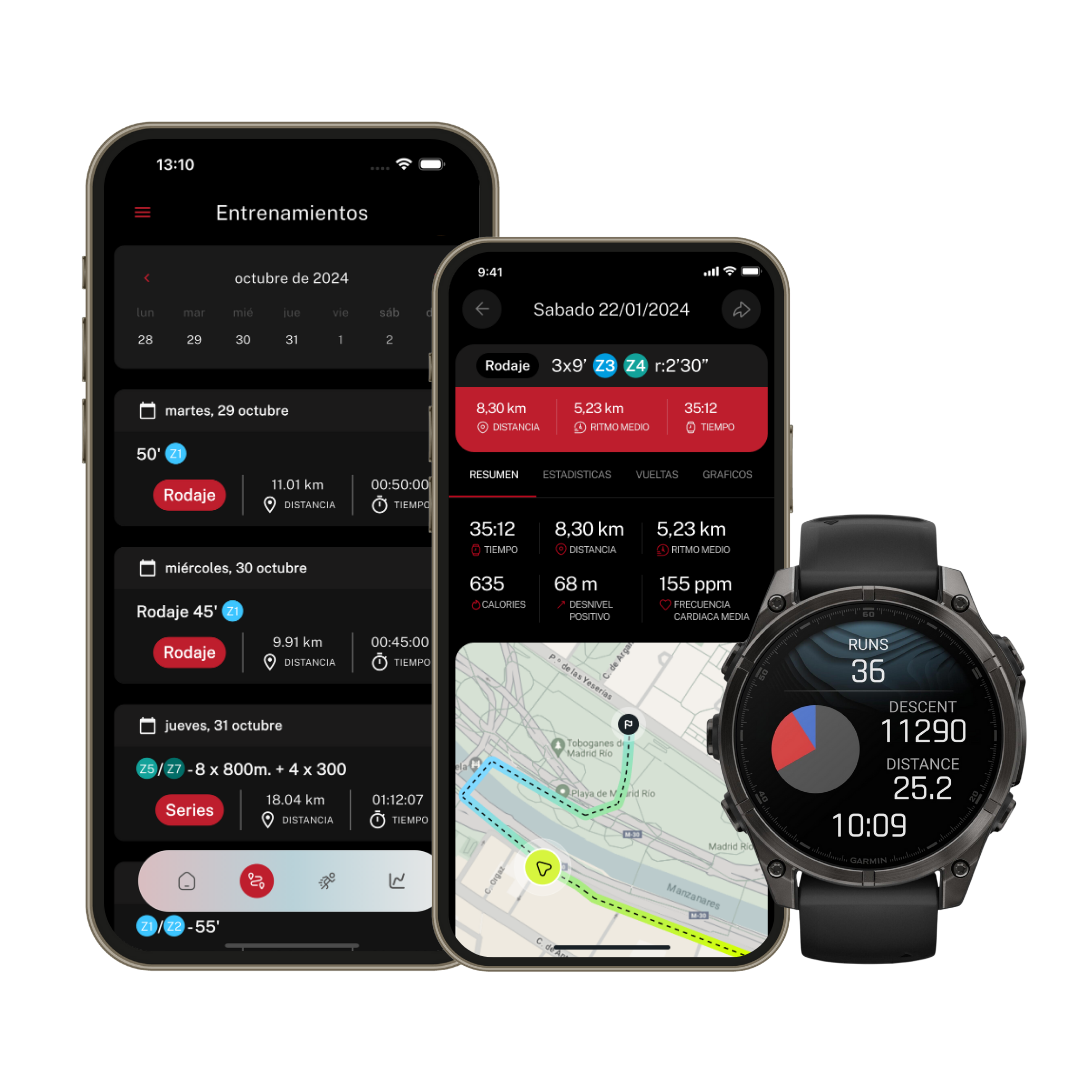
Your running coach app
Download Runnify
Training plans adapted to your current fitness level.
From learning to run and hitting your first 5K all the way to marathon — structured coaching in your pocket.
7 days free · Cancel anytime


Training note: This article provides general educational information, not individual medical or coaching advice. Adapt training to your experience and health, and consult a qualified professional if you have an injury, a medical condition or concerns about exercise.