Race Time Predictor
Estimate your finish time at any distance — from 5K to marathon and beyond — based on a recent race result. This calculator uses Riegel's formula, the standard model used by running federations worldwide. Once you have a predicted goal time, build a training plan in Runnify to prepare for that race.
Predicted results
Train for your predicted race with Runnify
Get a structured training plan adapted to your current fitness — from Couch to 5K through to marathon.
How to predict your race time
How the race time predictor works and frequently asked questions
What is a race time predictor?
A race time predictor estimates how fast you could finish a race at a different distance based on a recent result. It is most useful for setting a realistic goal time for an upcoming race based on your current fitness — not guessing.
Having a realistic baseline helps you determine training paces, fueling strategies, and race-day plans before you start a training block.
How the race time predictor works
This calculator uses Riegel's formula, developed by Peter Riegel:
T₂ = T₁ × (D₂ / D₁)1.06
- T₁ — your recent race time
- D₁ — the distance you raced
- D₂ — your target race distance
- T₂ — the predicted finish time
- 1.06 — the fatigue factor, accounting for pace slowing as distance increases
The formula works well for standard race distances from 1K through to a full marathon. It is most accurate when the input and target distances are within a reasonable range of each other.
Example race time predictions
The table below shows predicted finish times at common race distances based on sample 5K starting times. All predictions use Riegel's formula with the standard 1.06 fatigue factor.
| 5K time | 10K | Half marathon | Marathon |
|---|---|---|---|
| 20:00 | 41:29 | 1:31:46 | 3:11:51 |
| 22:00 | 45:38 | 1:40:57 | 3:31:06 |
| 25:00 | 51:51 | 1:54:48 | 3:59:53 |
| 28:00 | 58:05 | 2:08:39 | 4:28:39 |
| 30:00 | 1:02:14 | 2:17:20 | 4:46:49 |
| 35:00 | 1:12:37 | 2:41:28 | 5:37:16 |
These predictions assume flat road conditions and a pacing strategy appropriate for the distance. Your actual race time will depend on training, weather, course profile, and race-day execution.
When to use a race time predictor
Setting a race goal
Before starting a training block for a half marathon or marathon, plug in a recent 5K or 10K result to get a realistic goal time. This prevents training for an unrealistic pace — or setting a target too easy.
Planning training paces
Once you have a predicted race time, work backwards to calculate training paces for tempo runs, intervals, and long runs. Many coaches use predicted race times as the anchor for an entire training programme.
Choosing a race distance
Not sure whether to sign up for a 10K or a half marathon? Predict your time for both based on a recent result to help decide where to focus your training.
Tracking fitness over time
Run the same race distance every few months and track how your predicted times at longer distances change. Improving predictions without racing the longer distance confirms your training is working.
Race time predictor vs pace calculator
A race time predictor answers: "How fast could I finish this distance?" based on a result at a different distance — for goal-setting before a training block.
A pace calculator answers: "What pace do I need to hit my target time?" and provides a split chart — for pacing strategy in the final weeks before a race.
Use the predictor first to set a goal, train for it, then use a pace calculator to map out race-day splits.
Tips for accurate race time predictions
- Use a recent race time — ideally within the last 2–3 months.
- Use an all-out effort — the prediction assumes a genuine race effort, not an easy training run.
- Match the race type — road-to-road predictions are most reliable.
- Keep distance ratios moderate — predicting a 10K from a 5K is highly accurate; predicting a marathon from a 1K is not.
- Use multiple inputs — if you have recent results at two or more distances, run predictions for each to get a realistic window.
Train for your predicted race with Runnify
Get a structured training plan adapted to your current fitness — from Couch to 5K through to marathon.
Frequently asked questions
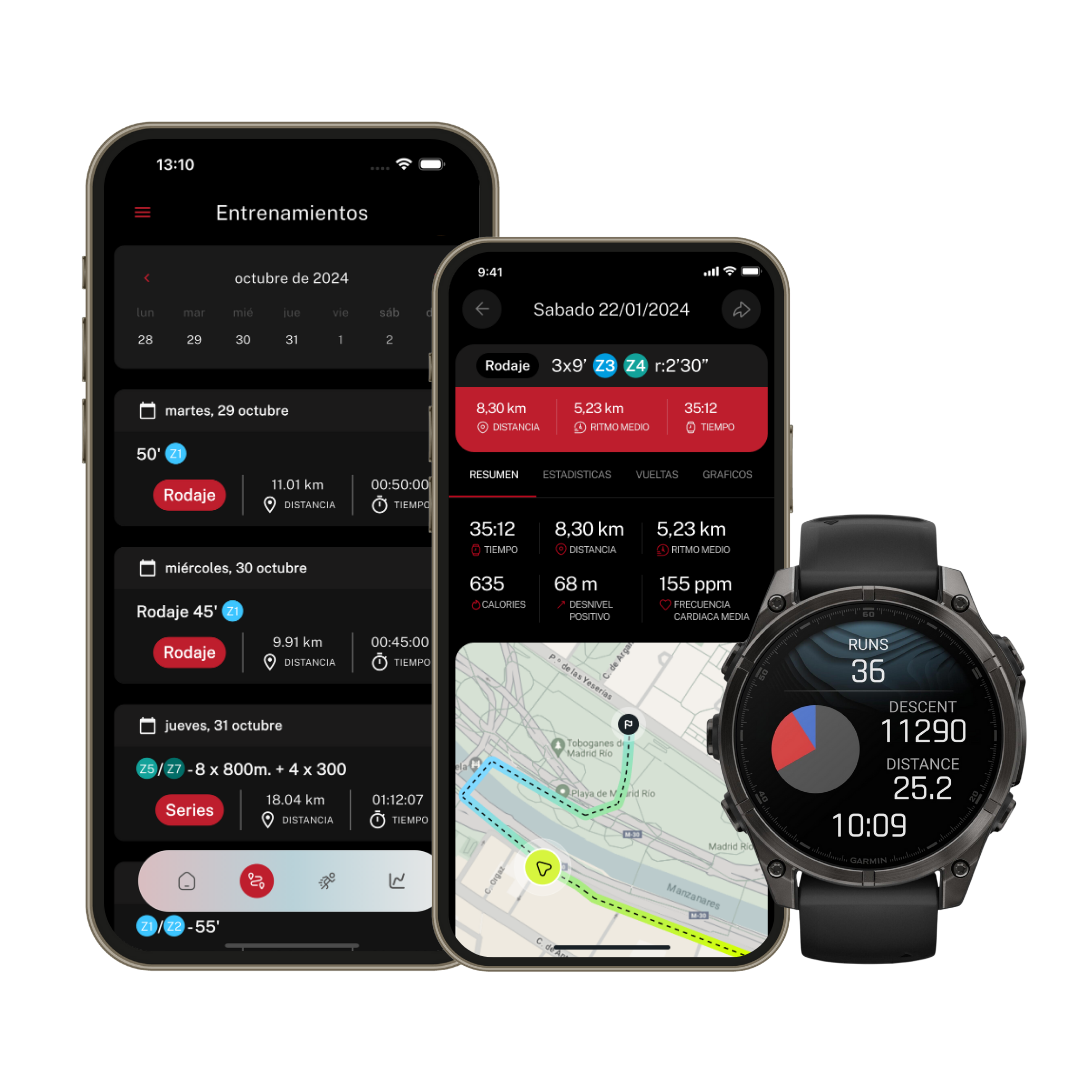
Take your running to the next level
Your personalized running coach with tailored training plans to achieve your goals, from running your first 5K to completing your first marathon.


7 days free. Cancel anytime.