A sub-20 5K is a demanding benchmark for many recreational runners, but it is not the only definition of commitment or ability. Age, sex, running history, course and conditions all shape what a finish time means. Treat 20 minutes as a specific performance goal—not a label for who counts as a serious runner.
The requirement is easy to calculate and difficult to execute: five consecutive kilometres a fraction faster than 4:00/km. At this level, small pacing errors matter and improvements often arrive more slowly. That makes structure and recovery increasingly important.
Sub-20 is not achieved by making every run hard. It is achieved by completing the right hard work on top of enough easy aerobic running—and recovering well enough to repeat it.
The pace you need for a sub-20 5K
Running exactly 4:00/km produces a 20:00 finish. To finish under the barrier, a practical target is 3:59/km, approximately 6:25 per mile. Five even kilometres at that pace produce a finish of about 19:55.
The five-second buffer allows for rounding and small execution errors. It should not become permission to open at 3:45/km. GPS distance and instant pace can vary, particularly around buildings and bends, so use course markers and manual laps where possible.
| Distance | Split | Cumulative time |
|---|---|---|
| 1 km | 3:59 | 3:59 |
| 2 km | 3:59 | 7:58 |
| 3 km | 3:59 | 11:57 |
| 4 km | 3:59 | 15:56 |
| 5 km | 3:59 | 19:55 |
Why progress stalls near the 20-minute barrier
There is no universal reason for a plateau. One runner may need a deeper aerobic base; another may lack comfort around threshold effort; another may simply be carrying too much fatigue. Sleep, nutrition, stress and health also influence how a training block unfolds.
The same medium-hard run, repeated
Moderate running is not wasted, but allowing it to dominate every day can blur the purpose of training. Easy runs become too demanding to support recovery, while quality sessions are not fresh enough to be truly effective. A clearer separation of effort often makes the week more sustainable.
Adding intensity before building capacity
Intervals attract attention because they look specific to the goal. Yet fast sessions work best when supported by consistent easy volume. Increasing the frequency, length and speed of workouts at the same time is a common route to excessive fatigue. Change one variable at a time and allow the body to adapt.
Following a schedule that cannot adapt
A template can provide useful structure, but no plan knows automatically how you slept, whether your calf is sore or how you responded to last week. Individualisation does not require laboratory testing; it begins with adjusting volume and intensity to your recent training, recovery and feedback.
A practical sub-20 training framework
A complete plan usually develops four connected qualities: aerobic endurance, threshold, race-specific speed and durability. How often each appears depends on your background and training frequency. The sessions below are examples, not a complete prescription.
1. Aerobic volume
Comfortable running develops the base that lets you absorb demanding sessions. Most of your weekly distance will generally feel easy, but there is no single percentage that fits everyone. Increase volume gradually, keep the longer run controlled and avoid turning it into a second race-specific workout.
2. Threshold-style training
Threshold work develops the ability to sustain a strong aerobic effort without crossing into an all-out race. The correct pace is individual and should not be copied from someone with the same 5K goal. Use a controlled “comfortably hard” effort and finish with stable form.
Example: broken threshold
After warming up, run 3 × 8 minutes at a controlled threshold-style effort, with 2 minutes of easy jogging between blocks. Cool down easily. Shorter blocks make it easier to manage effort and form.
3. Race-specific intervals
Repetitions around current 5K effort or goal pace help develop efficiency and pacing skill. They should be challenging but controlled; discomfort is not proof that adaptation is happening, and an all-out final repetition is not required.
Example: 400 m repetitions
After an easy warm-up and relaxed strides, try 6–8 × 400 m around current 5K effort with 75–90 seconds of easy recovery. At 3:59/km, one goal-pace lap is approximately 1:36. Start with a volume you can complete evenly.
Example: longer repetitions
Run 4 × 800 m at a controlled 5K-specific effort with 2–3 minutes of easy recovery. Longer reps expose pacing errors quickly, so consistency matters more than forcing goal pace before you are ready.
4. Strength and durability
One or two manageable strength sessions can support force production and running economy. Prioritise technique and a small number of movements: a squat or split squat, a hip-dominant exercise, calf work and trunk stability. Add drills or strides for coordination, but avoid forcing an arbitrary cadence or foot strike.
Schedule principle: many runners need only one or two demanding running sessions per week. Separate them with easy running or rest, and reduce the load when fatigue begins to alter pace, motivation or form.
Use training data without becoming ruled by it
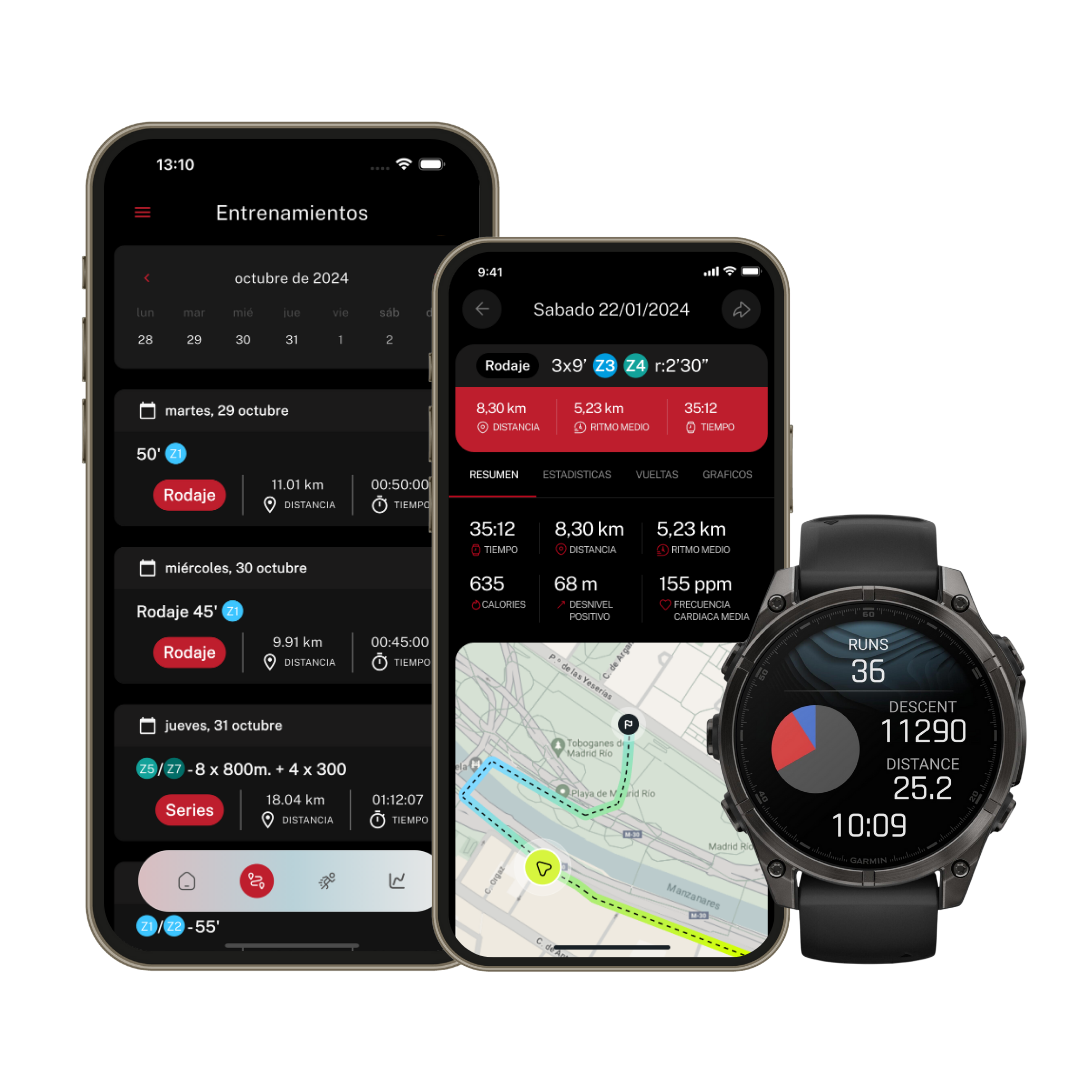
Wearables can reveal useful patterns in pace, heart rate, training load and recovery. They do not prevent injuries, diagnose fatigue or replace judgement. Consumer metrics are estimates, and a single unusual reading rarely tells the whole story.
Look for trends across several weeks. Are similar easy runs becoming more comfortable? Can you complete repetitions with steadier splits? Does fatigue resolve between sessions? Pair those observations with sleep, mood, soreness and perceived effort.
A pace calculator can translate current performance into training references, while an aerobic fitness estimate can help track trends. Treat both as inputs rather than promises. The final decisions should reflect how you are responding in the real world.
How to execute a sub-20 attempt
At this pace, a reckless opening kilometre can be expensive. The most reliable strategy for many runners is an even effort with the option of a slight negative split. Hills, wind and turns may make perfectly even clock splits unrealistic, so pace by effort when the course demands it.
Before the start
Choose a measured course, check the conditions and use familiar shoes, food and hydration. Complete an easy warm-up and a few short strides. Position yourself where you can settle into pace without weaving excessively.
Kilometre 1: control the adrenaline
Aim close to 3:59, not dramatically faster. Use manual laps at official markers if possible. The pace should feel urgent but organised, with relaxed shoulders and no early sprinting.
Kilometres 2–3: settle and assess
Keep the effort smooth and avoid responding to every runner who passes. At halfway, assess breathing and form rather than negotiating with the full remaining distance. Break the course into the next marker or minute.
Kilometre 4: stay engaged
This is often where concentration matters most. Use a short technique cue—“tall,” “quick” or “relax”—and hold the line. Avoid checking instant pace repeatedly; lap time and position on the course are more useful.
Kilometre 5: race what remains
If you are on target, increase effort progressively and save the full commitment for the closing stretch. Normal race discomfort is expected, but sharp, sudden or abnormal pain is a reason to stop rather than push through.
Your sub-20 5K checklist
- Use 3:59/km (approximately 6:25/mile) as a practical target for 19:55.
- Build consistent, comfortable aerobic volume before adding more intensity.
- Develop threshold with controlled sustained efforts.
- Practise race-specific pace through even, repeatable intervals.
- Include strength and mobility work that supports your individual needs.
- Protect recovery between demanding sessions.
- Use wearable data as context, not as a diagnosis or guarantee.
- Race with patience: controlled start, focused middle and committed finish.
Your running coach app
Download Runnify
Training plans adapted to your current fitness level.
From learning to run and hitting your first 5K all the way to marathon — structured coaching in your pocket.
7 days free · Cancel anytime


Training note: This article provides general educational information, not individual medical or coaching advice. Adapt training to your experience and health, and consult a qualified professional if you have an injury, a medical condition or concerns about exercise.